Nexelem
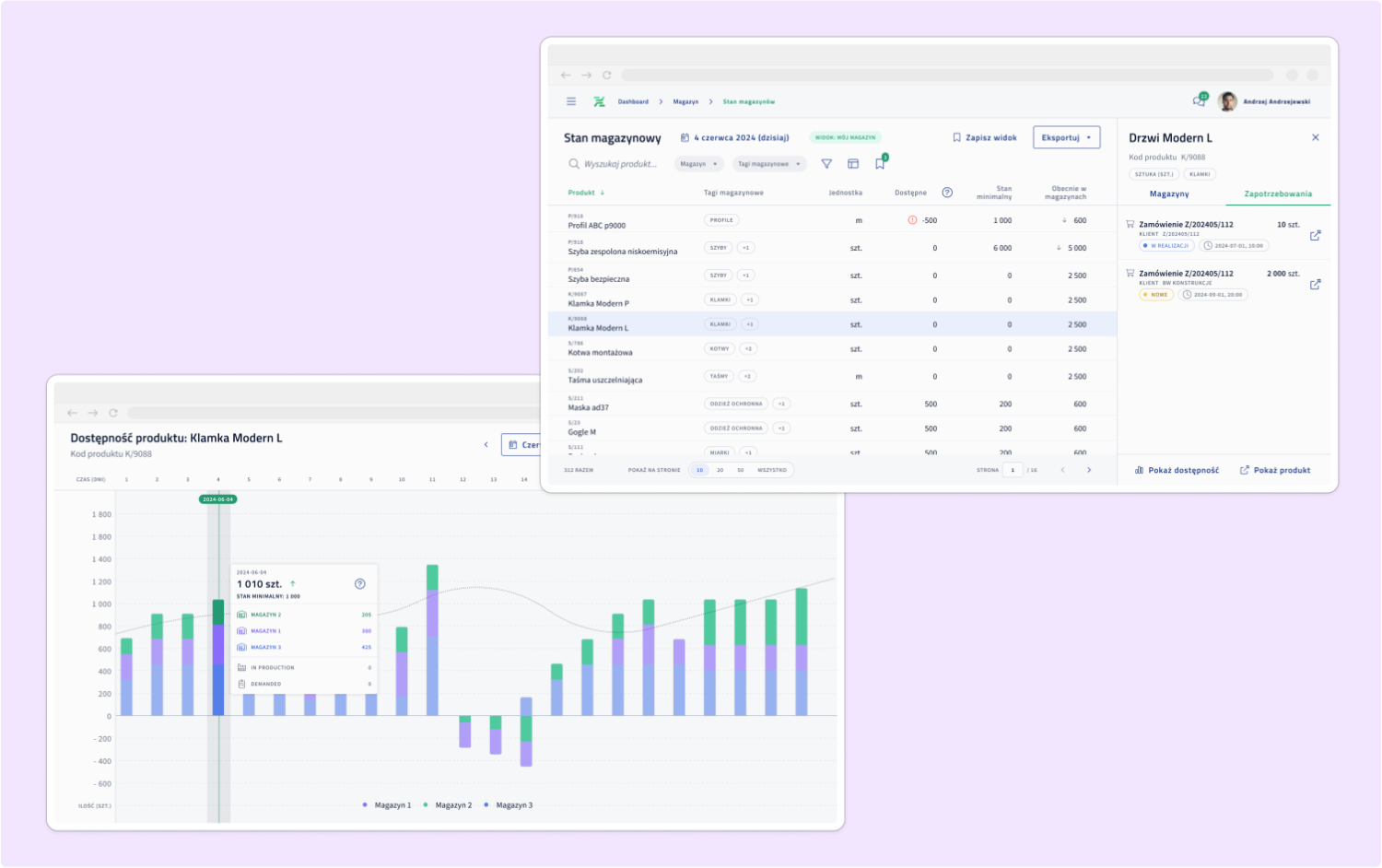
Manufacturing and warehouse management system, 2021-PresentDevelopment of a warehouse management module for manufacturing system
1. My role
I’ve joined the team as a UX researcher to support the development of a new warehouse management module and a stocktaking feature.
2. The problem
The customer needs to improve efficiency of inventory management. One of the things to be optimized is the stocktaking process because it is hampered by too large discrepancies between warehouse and actual states.
3. Approach
My first task, apart from exploring the new topic of production and storage, was to analyze existing data to understand the client's business processes and end users' needs. I did desk research according to a plan in which the primary goal was to extract information about:
- customer problems with inventory,
- inventory process at the client's,
- customer needs and suggestions.
At the same time I wanted to extract the fint similar information within the examples from other companies and their solutions — I wanted to approach the topic in a more generic way.
I went through some old notes and recordings from the previous meetings with the client (conducted before I joined the team) and the previously performed competition analysis. On this basis, I determined the client's problems and located them in specific places in the process. During the analysis, further research questions were created, which will be useful for me in the future to plan further research supporting the development of the inventory module.
The next step was to expand the existing competitive analysis, as the existing one did not provide sufficient answers for the team. In particular, I needed to answer two research questions: what is missing in existing inventory software and how our software can address these gaps and issues. For this purpose, I used a standard search engine, analysis of YT videos and Gemini AI to create a comparative analysis of similar solutions.
4. Output and results
The output was a summary board in Figjam, where I collected answers to desk research questions. For example, it turned out that:
- the client does not plan an inventory, which is good practice in warehouse management,
- there are many exceptions in the production process that make it difficult to define inventory levels - e.g. the status of production waste is unclear, some of which is reusable or goods are transported on racks, which is also subject to records, but is not the property of the company.

I have included these and other issues in the client's mapped inventory process and will be the subject of further research.
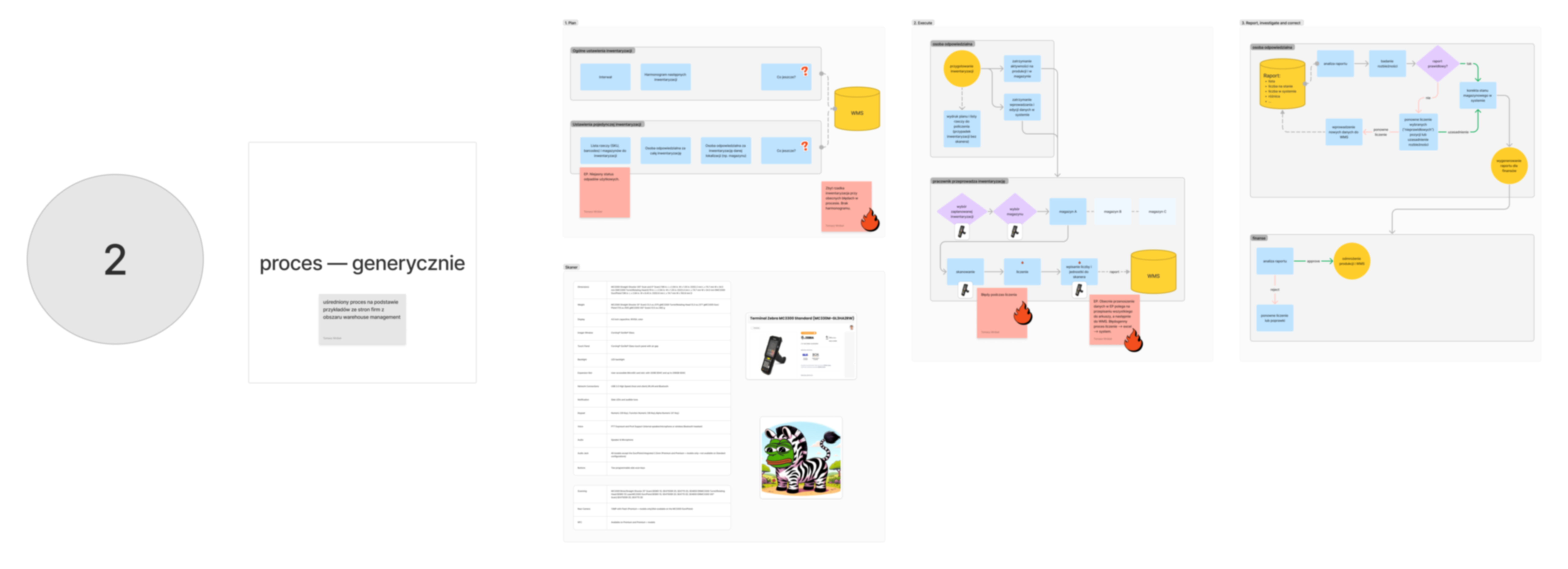
Finally, after analyzing the competition, I collected the most frequently repeated solutions and shortcomings in similar solutions. The key turns out to be, probably:
- inventory planning functionality,
- usability of software for mobile product scanners,
- adapting the inventory module to the narrow industry in which the client operates.
5. Impact
Research helped me to define MVP and support the design of the final solution for desktop app and mobile scanning devices.
6. Next steps
The Nexelem project continues and I work on development of further features:
- traceability,
- gantt chart for production planning,
- workstation software.